Essential Shooting Gear and Accessories
Safety is the first and non negotiable requirement for any shooting activity. Follow eye and ear protection standards, secure storage, trained emergency responses, and range signage before handling any firearm. Standards such as ANSI Z87.1 for eye protection and OSHA noise limits at 85 dB set minimum expectations for protective gear. Familiarity with federal statutes like 18 U.S.C. § 922 for transfers and possession is important for legal compliance.
Safety Essentials, Range Behavior, and Storage
Proper protective eyewear rated to ANSI Z87.1 blocks fragments and chemical splash risks. For ear protection, passive muffs with NRR 25 or greater suit most ranges, while electronic muffs with noise suppression let safe communication occur and are popular for teaching. Range safety gear includes visible warning placards, a clearly marked firing line, and barrier flags for disabled weapons. First aid kits should include hemostatic gauze, chest seals, and a tourniquet; these are proven life saving measures in bleeding emergencies and are recommended by frontline trauma programs since 2015. Secure storage and transport require locked containers and trigger locks for local laws; most commercial airlines require unloaded firearms in locked, hard sided cases declared during check in, and TSA guidance should be consulted before travel.
Choosing a First Shooting Platform and Ammunition
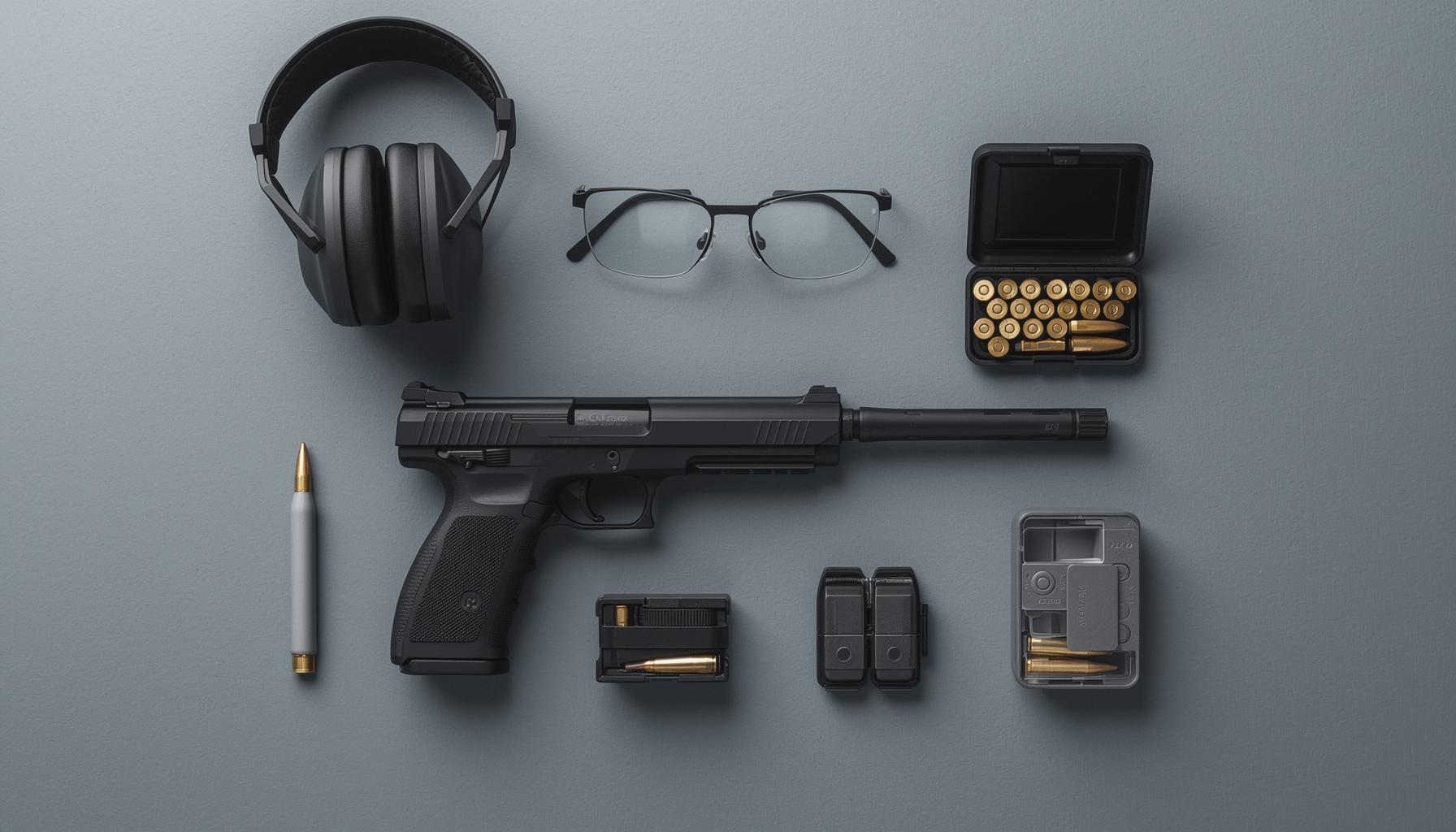
Selecting between handgun, rifle, and shotgun depends on intended use. Handguns excel for close range and carry, rifles for precision and hunting at distance, and shotguns for moving targets and short range power. Caliber selection for beginners often favors manageable recoil with common, affordable cartridges. For pistols 9x19mm is a pragmatic starter choice because of moderate recoil, wide availability, and ammunition cost typically between $0.25 and $0.80 per round as of 2025 retail prices. For rifles .223 Remington/5.56 NATO fits many beginners for low recoil and ammo availability. Shotguns in 12 gauge are versatile but consider 20 gauge for lower recoil while hunting.
Below is a comparison chart for beginner platforms with practical metrics and starter caliber suggestions. Text explains choices before and after the chart to assist decision making.
| Platform | Typical Starter Caliber | Average Recoil Level | Typical Use Cases | Beginner Suitability | Typical Capacity |
|---|---|---|---|---|---|
| Semi Auto Pistol | 9x19mm | Low to Moderate | Defensive, range training | High for most shooters | 10–17 rounds |
| Revolver | .38 Special | Low to Moderate | Teaching fundamentals, backup | Good for simplicity | 5–6 rounds |
| Bolt Action Rifle | .22 LR / .223 Rem | Very Low / Low | Precision practice, varmint hunting | Excellent for marksmanship | 5–10 rounds |
| Semi Auto Rifle | .223 Rem / 5.56 NATO | Low | Target, hunting, competition | High for progression | 10–30 rounds |
| Pump Shotgun | 20 or 12 gauge | Moderate | Home defense, bird hunting | Good with instruction | 4–8 shells |
Choosing used versus new firearms should consider provenance, bore condition, proof marks, and the seller’s reputation. A reputable gunsmith inspection for a used purchase reduces long term risk.
Sights, Optics, Mounting, and Zeroing
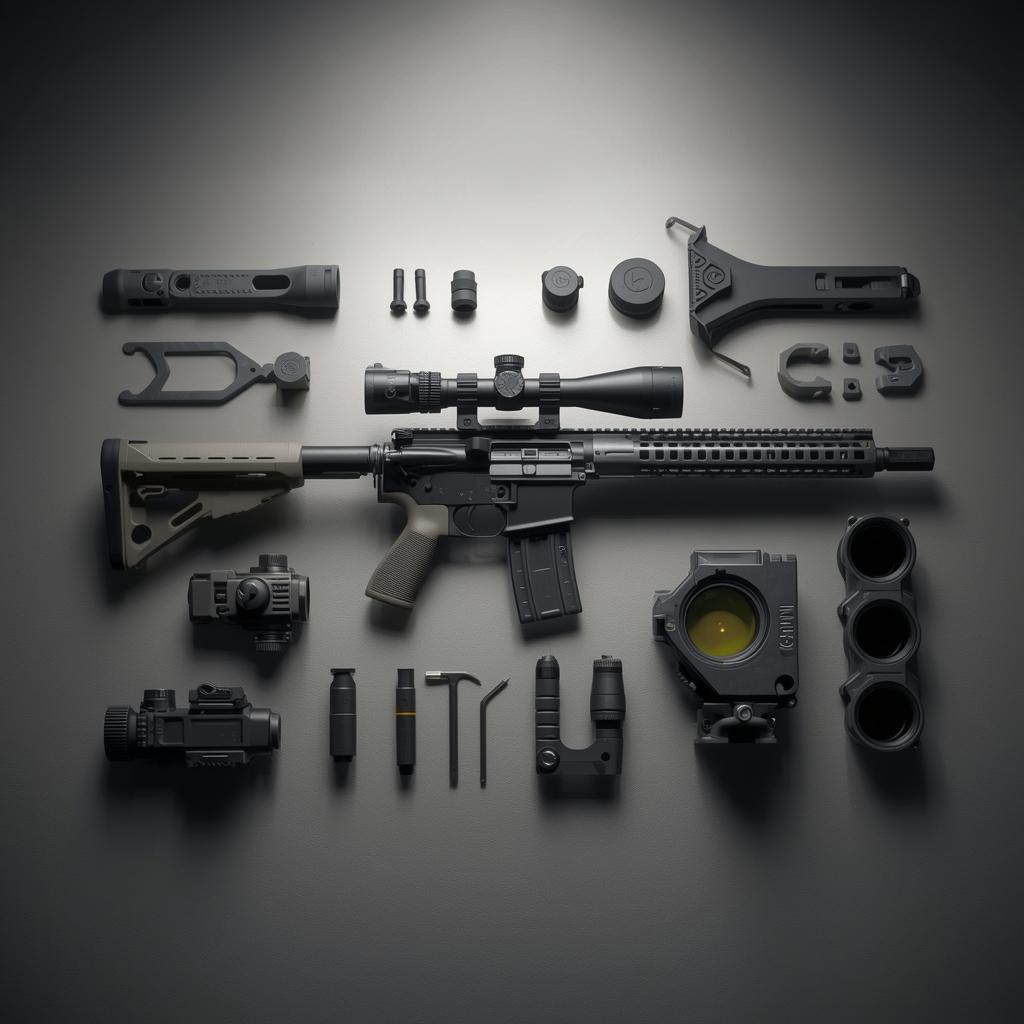
Iron sights form the baseline skill set; mastering sight alignment is mandatory before migrating to optics. Red dot sights offer a single focal plane which speeds target acquisition and suits pistols and close range rifles. Rifle scopes require choices about magnification and reticle type. A 3–9x40 scope remains a versatile starter optic for many hunting situations. Mounting standards include Picatinny and Weaver rails; compatibility checks are essential since ring spacing varies. Use a calibrated torque wrench for mounting; follow manufacturer torque specs to prevent creep. Boresighters and laser alignment tools simplify initial sighting. Zero optics at a known distance, record environmental conditions, and confirm groups with live fire at 25, 50, and 100 yards for rifles.
Maintenance, Supports, Range Packing, and Training
Routine cleaning keeps accuracy and reliability. Starter cleaning kits typically include a rod, bore brushes, patches, solvent, and light lubricant. For corrosion protection consider a light film oil with proven salt spray resistance. Multi tools and basic armorer kits, including punches and a torque wrench, support common adjustments. Stabilization gear such as bipods, shooting rests, and slings improve group sizes and teach follow through. Range bag organization should prioritize safe storage of eye and ear protection, locked ammo containers, water, a basic first aid kit, and a small folding target stand. Mid range electronic chronographs and ballistic calculator apps measure muzzle velocity and help build a practical load table for field shots. Dry fire practice with snap caps accelerates trigger control with minimal range expense.
Practical drills include controlled pairs, 1/3/5 yard draws for handguns, and positional shooting for rifles. Reactive steel targets demand safe backstops and proper spacing to avoid ricochet. Electronic scoring systems increasingly integrate with smartphones for instant feedback and shot logging.
Buying, Professional Services, Legalities, and Budgeting
Prioritize essentials: safe storage, eye and ear protection, basic cleaning kit, and a quality sling or holster. Budget picks under $300 can include polymer framed pistols for training and bolt action rifles in .22 LR for marksmanship. Mid range items $400–$1,000 bring better ergonomics and optics. Premium gear pays off for durability, optics clarity, and resale value with established manufacturers. Use a qualified gunsmith for action truing, headspace checks, and complex optic mounts. Warranty terms vary; retain receipts and record serial numbers.
Legal and ethical responsibilities extend to obeying local statutes on modifications and magazine capacities. Range etiquette requires checking the line, announcing misfires, following cease fire commands, and transporting firearms unloaded. Ethical hunting practices involve using appropriate calibers and tracking techniques to ensure humane results.
Quick Reference and Glossary
Common terminology includes point of impact, zeroing, NRR for hearing protection, and bore sight. Maintenance intervals: clean after every range session for rimfires, every 300–500 rounds for centerfire hunting rifles, or sooner if exposed to salt or moisture. Manufacturer support contacts and retailer warranties should be recorded with purchase dates for future service.